

Duravit inaugurates its Matane plant
Designed to ensure maximum environmental sustainability, the plant uses an innovative electric kiln from Riedhammer (Sacmi Group) powered 99.6% by hydroelectric energy.
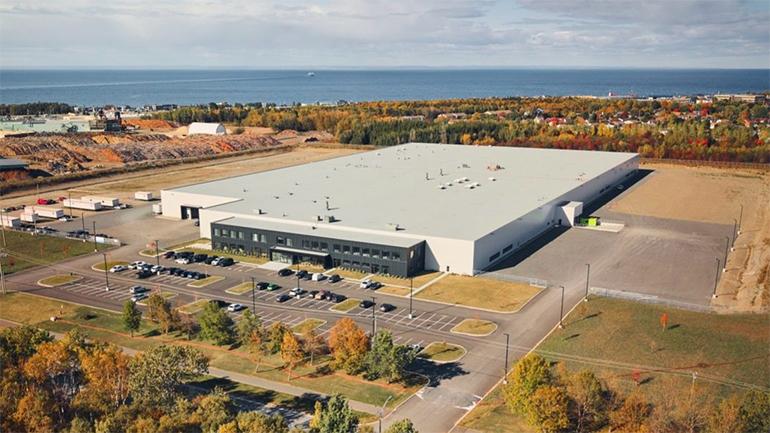
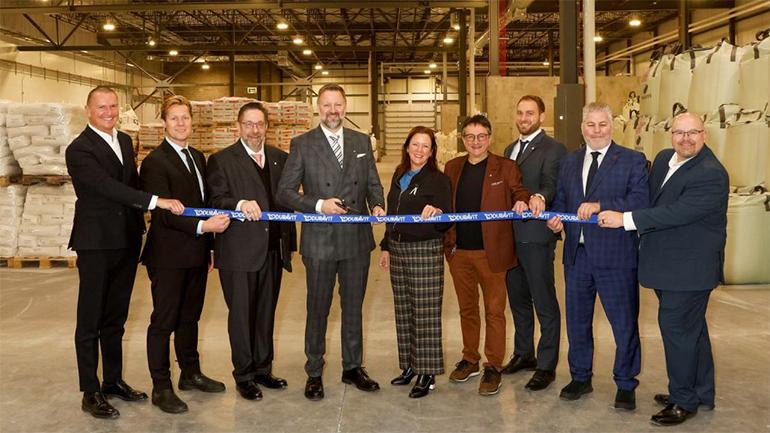
Just over two years after the foundation stone was laid in July 2023, Duravit officially inaugurated its new plant in Matane, Québec on 27 November at an event attended by around eighty guests from politics, industry and the regional community. It was a day marked by pride and anticipation, signalling a new chapter in Duravit’s history and in ceramic production in North America, as well as a significant step towards a more sustainable future for the sanitaryware industry.
“Since 1817, responsibility has been part of our DNA, and in Matane that legacy has reached a new milestone,”
notes Duravit, emphasising that the project is much more than a new production site and was conceived from the outset around the three pillars of environmental, economic and social sustainability.
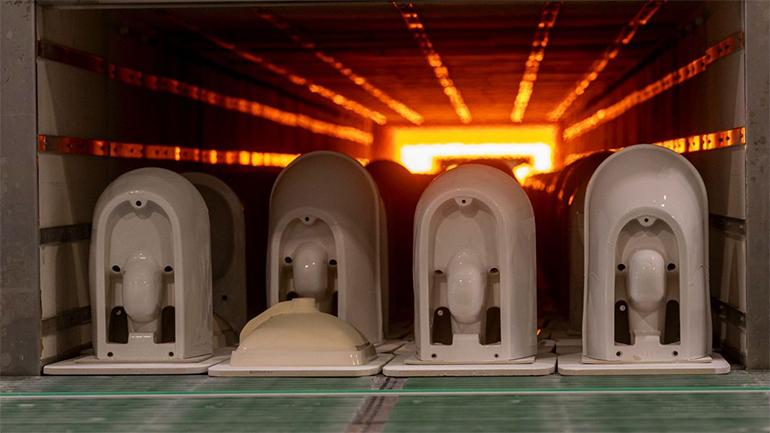
The new factory, built with an investment of more than 90 million Canadian dollars (over €54 million), is a milestone on Duravit’s path to climate neutrality by 2045. At its heart is a pioneering electric roller kiln powered 99.6% by hydroelectric energy supplied by Hydro-Québec. Developed by Riedhammer, part of the Sacmi Group which also supplied all the advanced production and automation technologies, the kiln is around 100 metres long and can fire up to 600 WCs a day, with firing cycles of about 16 hours at 1260°C. A heat recovery system captures hot air from the kiln and reuses it in the drying and casting stages.
The electric kiln, combined with the use of local raw materials (clays and feldspars sourced exclusively from Canada and the United States), cuts CO₂ emissions by up to 9,000 tonnes per year.
A further reduction in emissions of around 1,500 tonnes of CO₂ per year comes from producing directly in North America, replacing imports from Europe in line with the German group’s “local for local” strategy. Logistics are also simplified by the plant’s strategic location on a 35,000 m² site on the Saint Lawrence River, with direct access to a deep-water port.
The Matane plant combines environmental responsibility with strategic efficiency. It is highly automated in accordance with Industry 4.0 principles and has an installed capacity of up to 450,000 pieces per year, a level Duravit expects to reach in 2027.
“With this production facility, we are sending a strong signal for a future in which economic success and environmental responsibility are not at odds but mutually reinforce each other,” says Gregor Greinert, Chairman of the Duravit Supervisory Board.
A joint project with the local community
The new plant already employs more than 100 people, with plans to increase this to 240 by 2027, and will support solid economic growth for local suppliers. Christian Gilles, head of Duravit Canada, underscored this point in his address to local authorities and political representatives at the inauguration:
“The Matane region has supported us with great confidence from the very beginning. It’s a joint project with the local community. We want to create long-term jobs that offer opportunities and actively contribute to economic development.”
He also thanked the Government of Québec, which supported the project with an C$11m loan through the ESSOR programme. Additional support for the new factory came in the form of federal loans and funding for staff training.
The Matane inauguration marks an important milestone in Duravit’s global growth strategy. It is the Hornberg-based multinational’s tenth production facility, joining three plants in Germany, two in Egypt, two in China, one in France and one in India. With around 6,800 employees worldwide, the group produced 3.86 million high-end sanitaryware units in 2024, generating consolidated revenues of €631.2 million.

Did you find this article useful?
Join the CWW community to receive the most important news from the global ceramic industry every two weeks





Related articles

Recent articles
Sirsi Valves accelerates its growth



Bruno Bettelli elected President of ACIMAC

Main topics

Read more