
Italian ceramic industry: energy and ETS charges squeeze margins
The Italian ceramic industry closed 2025 with revenues of €7.5 billion, with 80% generated by the tile sector
By Paola Giacomini
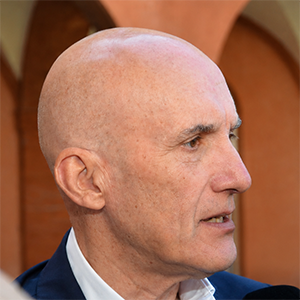
At the annual general meeting, where Augusto Ciarrocchi was re-elected chairman and Vittorio Borelli, Luigi di Carlantonio, Giorgio Romani, Alberto Selmi and Graziano Verdi were confirmed as vice-chairmen for a second two-year term, Confindustria Ceramica presented the 2025 results for all segments of the Italian ceramic industry: tiles and slabs, sanitaryware, porcelain and tableware, refractories and heavy clay. The sector comprises 242 companies employing 25,550 people directly and generated turnover of €7.49 billion (-1% on 2024), of which €5.34 billion came from exports.
Overall, the results highlight the resilience of a sector that remains one of the flagships of Italian manufacturing, despite operating in an extremely challenging production and market environment. High energy costs and ETS charges continue to weigh heavily on performance, compounded by weaker demand in several markets and increasingly intense international competition. This mixed picture has continued into 2026.
Tiles and slabs: volumes recover but revenues stagnate
As the driving force of the Italian ceramic industry (accounting for over 80% of total turnover), the ceramic tile and slab sector continued its long-term consolidation trend. At the end of 2025, there were 117 tile manufacturers operating in Italy (five fewer than in 2024) across approximately 200 plants, while the direct workforce fell to 17,676 (down 333 on the previous year).
The sector closed 2025 with growth in both production volumes – reaching 390.9 million sqm (up 5.7% on 2024) – and sales volumes, which rose to 386.9 million sqm (+2.3%). Sales volumes increased modestly in both the domestic Italian market (85.2 million sqm; +0.6%) and export markets (301.7 million sqm; +2.8%). However, as in the previous year, “volumes were maintained only at the expense of average prices, which fell by 2.5% compared with 2024”, noted Ciarrocchi. The average price in Italy dropped from €12.80 to €12.50 per sqm, while export prices fell from €16.96 to €16.49 per sqm – albeit remaining the highest among all major exporting countries.
This price decline affected all key markets, from the United States to the European Union, which absorbed over half of all export volumes. Ciarrocchi cited Germany, where sales grew by 3.6% in volume and 2.6% in value, and France, where volumes fell by 1.2% and sales value declined by 4%. Consequently, total sector revenues remained virtually unchanged at €6.04 billion (-0.4%), with €1 billion generated on the domestic market (-1.8%) and €5 billion from exports (-0.1%), representing 82% of total sales value. A further €906 million (+0.2%) was generated by 17 overseas companies controlled by Italian ceramic groups and operating production facilities in Europe and the United States, which produced a combined volume of 75 million sqm last year.
The first few months of 2026 have shown no sign of a turnaround. On the contrary, the first quarter recorded a 0.5% drop in sales volume and a 2% decline in value.
Margins and investments in decline
The most concerning issue for manufacturers remains the severe pressure on margins, caused not only by falling selling prices but primarily by soaring energy costs and direct ETS charges, which have wiped out an estimated €70 million a year. This has inevitably weighed on investment, which fell to €321 million last year (-16%) following an already significant decline in 2024 (-19%).
““In two years, we have lost €150 million in investments,” Ciarrocchi warned, adding that if the European Commission refuses to revise the benchmarks for free allowance allocations for the 2026-2030 period, direct ETS costs for the Italian tile industry will soar from €70 million to €120 million per year. “Unless the situation changes, it poses a serious threat to the future of the Italian ceramic industry and thousands of jobs,” he said. Unsurprisingly, in this high-stakes negotiation in Brussels, Confindustria Ceramica has the full backing of the regional political and industrial network – the Emilia-Romagna regional government, local municipalities, sectoral trade unions and Acimac. “This extraordinary display of solidarity gives us confidence”, Ciarrocchi continued, “especially since the European Commission will present a comprehensive review of the ETS Directive in July, reopening the entire framework of the system.” As demonstrated by a study conducted by the Bicocca University of Milan, this system has been transformed “from a decarbonisation tool into an engine of destruction for European industrial value, forcing production to relocate outside the region. As a result, emissions are removed from our environmental balance sheets but remain completely unchanged globally, leaving industrial communities like ours to bear the real-world economic cost.””.
| 2022 | 2023 | 2024 | 2025 | % Var. 2025/2024 | ||
|---|---|---|---|---|---|---|
| Companies Aziende |
128 | 125 | 122 | 117 | -4.1% | |
| Employees Addetti |
18,639 | 18,432 | 18,009 | 17,676 | -1.8% | |
| Production Produzione |
Mln m2 | 431.2 | 373.7 | 369.8 | 390.9 | +5.7% |
| Total sales Vendite totali |
Mln m2 | 448.9 | 369.2 | 378.3 | 386.9 | +2.3% |
| Domestic sales Vendite interne |
Mln m2 | 92.7 | 84.4 | 84.8 | 85.2 | +0.6% |
| Exports | Mln m2 | 356.2 | 284.8 | 293.5 | 301.7 | +2.8% |
| Total turnover Fatturato totale |
Mln € | 7,186 | 6,175 | 6,062 | 6,041 | -0.4% |
| Domestic sales Vendite interne |
Mln € | 1,215 | 1,126 | 1,084 | 1,064 | -1.8% |
| Exports | Mln € | 5,971 | 5,049 | 4,979 | 4,976 | -0.1% |
| Investments Investimenti |
Mln € | 441.3 | 473.8 | 382.0 | 320.6 | -16.1% |
Other ceramic industry sub-sectors
Around 20% of the total revenues generated by the Italian ceramic industry last year came from its other four sub-sectors. The heavy clay sector – consisting of 57 companies and 3,000 employees – produced and sold 4 million tonnes of clay bricks and roof tiles in 2025 (-2%), generating a turnover of €650 million (-7%), primarily on the domestic market.
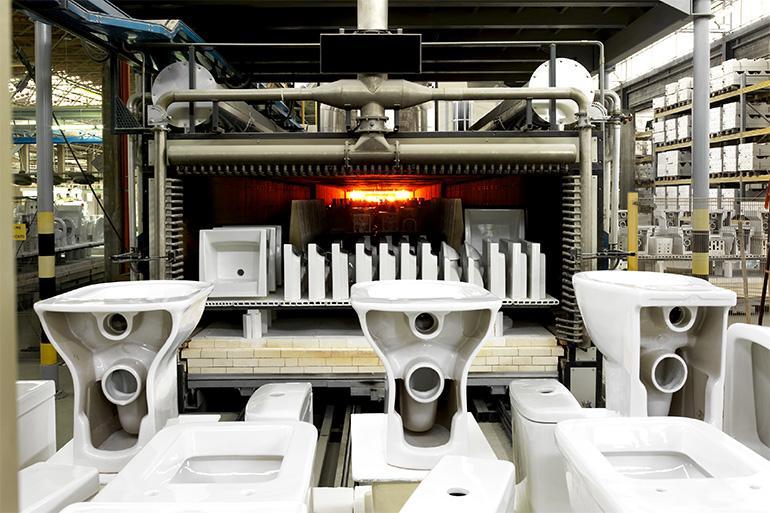
The ceramic sanitaryware industry, consisting of 31 companies mainly concentrated in the Civita Castellana district (Viterbo) and employing 2,659 people, produced 3.1 million pieces last year (-2.6%). Sales volumes were slightly higher at 3.3 million pieces (-1.2%), generating revenues of €415 million (+0.2%), with 40% going to international markets.
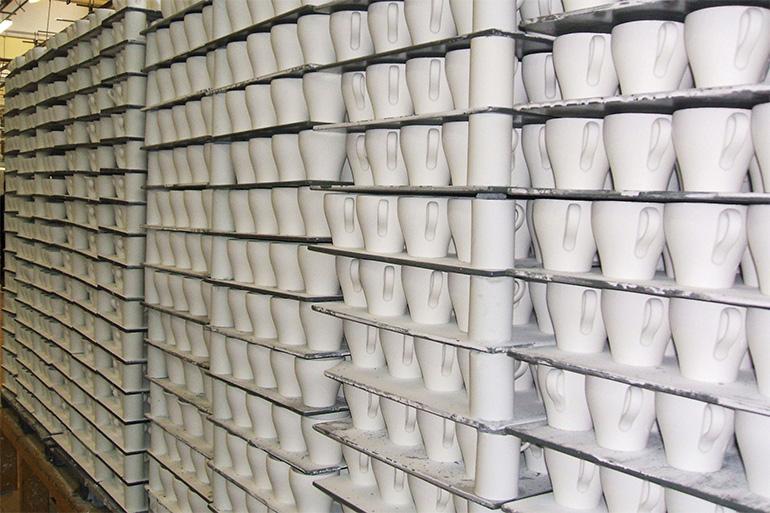
The refractories industry, comprising 29 companies and 1,539 employees, produced 270,200 tonnes, generating a turnover of €325.8 million (-6.4%), with exports accounting for 53% of the total. Finally, the ceramic tableware sector, consisting of eight companies and 676 employees, produced 9,570 tonnes of tableware last year (-0.7%), generating turnover of €60 million (+3.9%). The domestic market generated 77% of sales volumes and 62% of revenues.

Did you find this article useful?
Join the CWW community to receive the most important news from the global ceramic industry every two weeks






Recent articles
Marcheluzzo revamps La Moderna's production plant

Ceramics China: Next appointment in June 2027


Main topics

Read more