
Heavy clay drying systems: Marcheluzzo’s latest advances
The Vicenza-based company has refined its expertise in thermodynamics, developing advanced know-how in drying and firing processes.

Since its inception in the mid-1970s, Marcheluzzo has always stood out for its customer-centric approach, tailoring every technological project to specific production requirements. An international reference point in the supply of turnkey plants for the heavy clay industry, the company has progressively expanded and improved its knowledge of thermodynamic processes, developing a high level of expertise in drying and firing.
This development led to the creation of a specialised department dedicated exclusively to these highly critical production stages. Under the leadership of the company’s CEO, Paolo Marcheluzzo, and with the support of a highly qualified technical team that shares his vision of innovation, the company is able to develop increasingly high-performance, efficient and sustainable plant solutions.
Material science and thermal treatment
Years of experience working with a wide range of raw materials have given Marcheluzzo an in-depth understanding of their characteristics and behaviours. Drying remains a crucial stage of the production process. Fully aware that the right drying process is essential to the quality of the final product, manufacturers are constantly in search of suitable solutions.
The evolution of drying processes
Drying processes have evolved significantly in terms of design and engineering, impacting both air distribution within tunnels and the arrangement of products on the dryer cars.
In this context, Marcheluzzo has developed extensive experience in the design and construction of various types of dryers: from static cell systems for special materials to semi-continuous tunnels, widely used for their high operational flexibility and ability to treat different types of products.
Current R&D efforts focus on plant sizing and primary/secondary ventilation systems to optimise energy management – a priority given the rising cost of fuel.
Static dryers
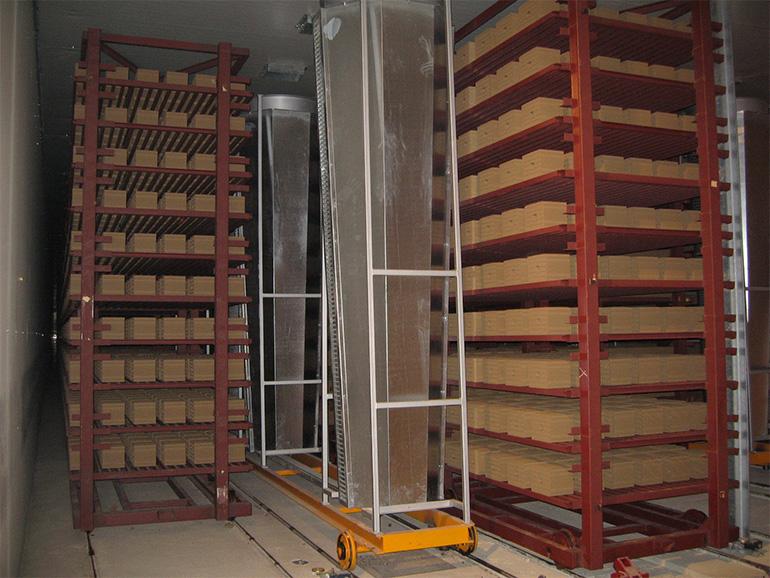
Dryers in the heavy clay industry generally fall into two categories. The first is static dryers, consisting of chambers of appropriate dimensions that perform a specific drying cycle once loaded, with durations varying according to the type of finished product and the raw material characteristics.
This dryer type is ideal for special products requiring medium-to-long cycles, where technicians can set differentiated drying curves for each cell.
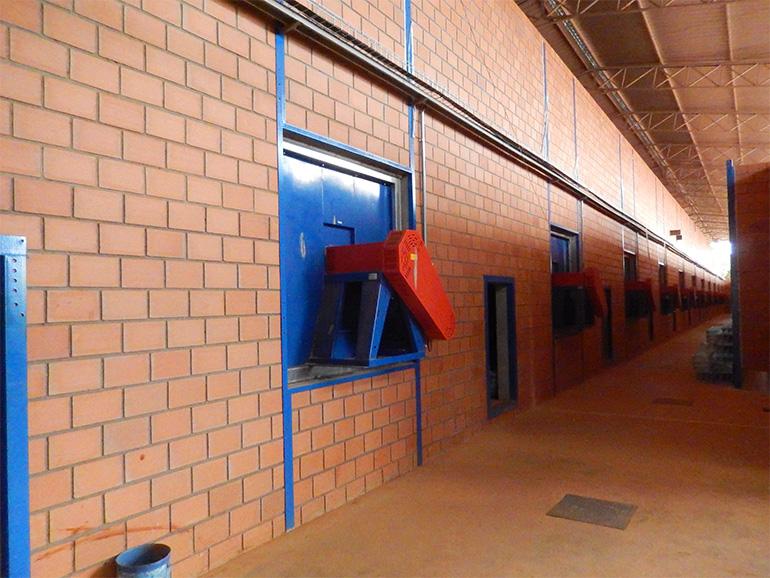
A major project commissioned from Marcheluzzo in 2025 involved a complete plant for the production of solid and semi-perforated bricks. In this case, drying is handled by a 38-cell system equipped with internal travelling cone ventilation to ensure optimal energy distribution. With an air outlet velocity of 12-13 m/s, the system ensures high uniformity across the ventilation section. The meticulous cone profile design and the correct choice of impellers allowed for the installation of 2.4 kW rated motors with actual consumption below 2.2 kW and flow rates close to 32,000 m³/h.
The dryer dimensions and technical and energy characteristics are always chosen on the basis of preliminary field assessments to accurately characterise raw materials and analyse product behaviour in both new and existing drying systems.
Semi-continuous dryers
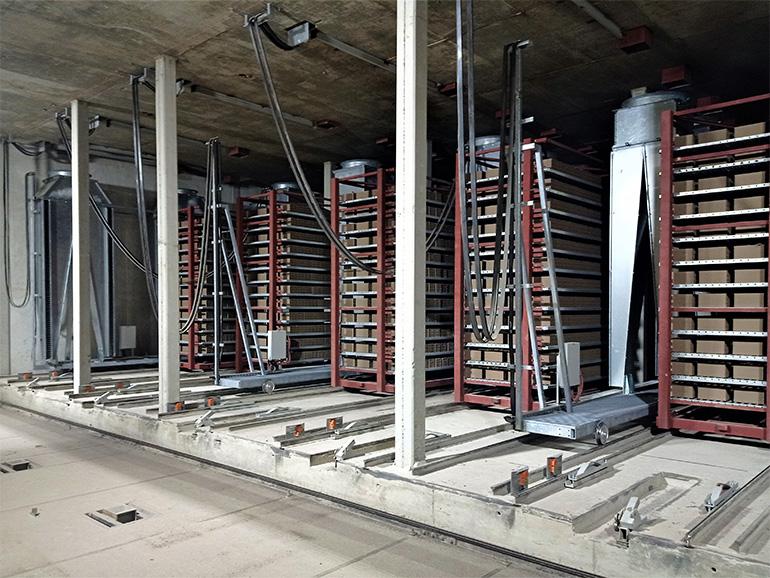
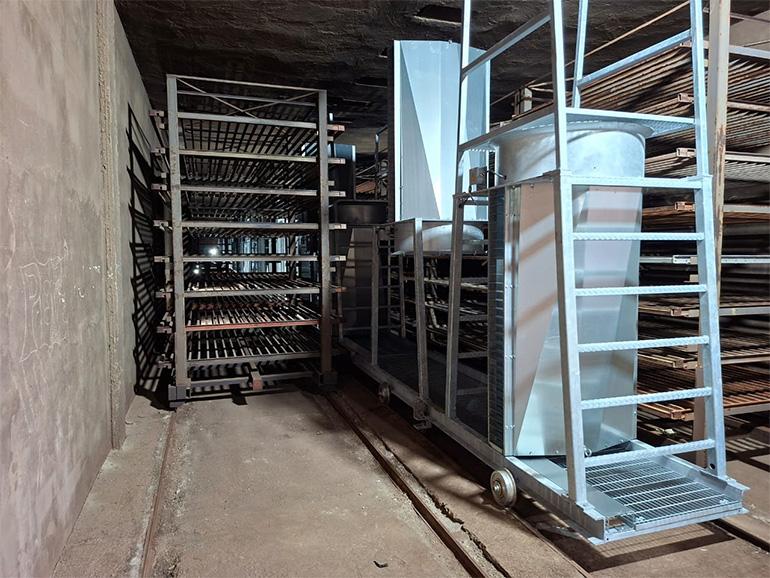
The second family consists of semi-continuous dryers, which are loaded continuously during operation but function as static systems during production stoppages. They are automatically controlled by a PLC that ensures continuous monitoring of the real humidity and temperature parameters inside the tunnels.
Marcheluzzo boasts extensive experience in this area too, with numerous installations in various parts of the world. By studying counter-current airflows and integrating secondary air from internal ventilation, the company has achieved outstanding results, including cycles of less than 24 hours in high-capacity plants.
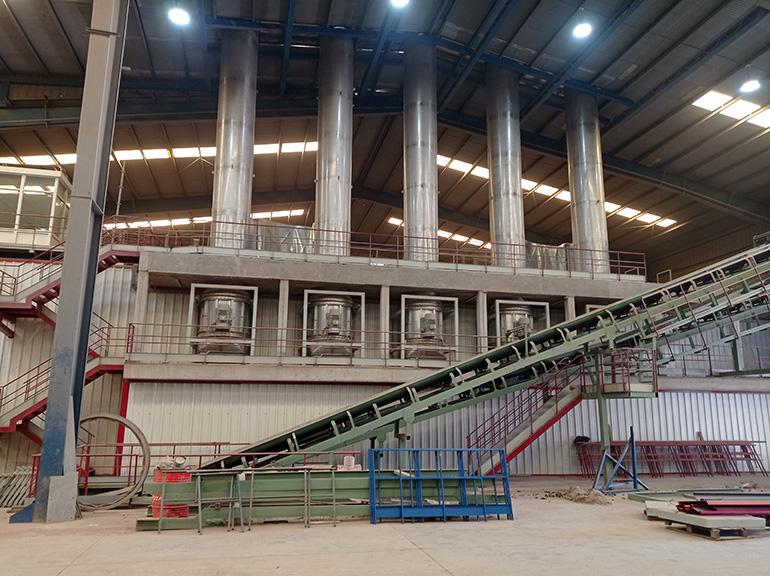
One key factor behind this success is the use of MT 80 and 90 series and MT 40 and 45 series agitators, which significantly improve drying process efficiency. For example, a recent upgrade at a plant in Southern Italy involved replacing internal ventilation with MT40 double inverted-cone units. This allowed for effective ventilation even near the dryer ceiling, increasing overall efficiency and daily output.
Rapid drying systems
The demand for ever faster cycles has led to the development of rapid drying systems which allow for cycles of just a few hours when used with suitable materials. Although these systems are less operationally flexible, they have the advantage of a lower initial investment.
Rapid rack dryers have been popular since the 1970s, particularly for thin-walled products. However, their medium to high levels of energy consumption make them less competitive today in regions with high energy costs.
In recent years, Marcheluzzo has explored rapid and medium-rapid technologies as an alternative to traditional semi-continuous systems.
New-generation tunnel dryers
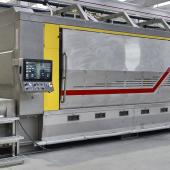
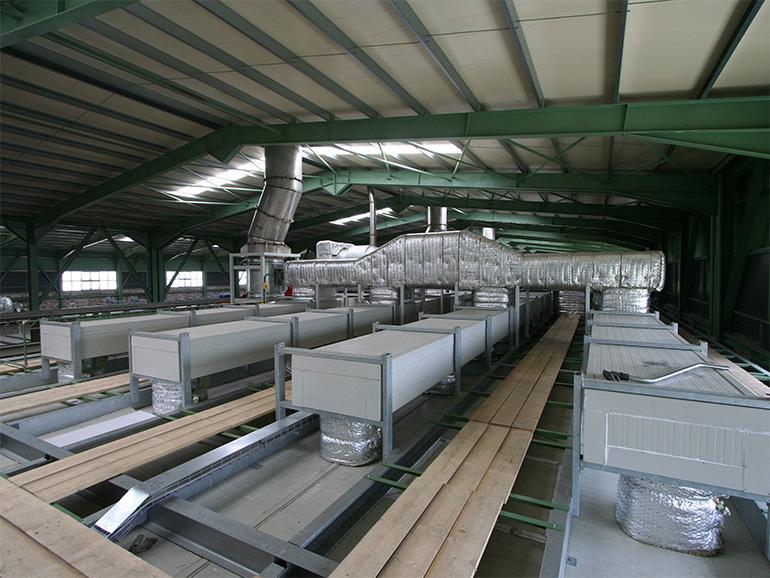
The latest generation of tunnel dryers with cross-ventilation is a concrete response to manufacturers’ demands for lower initial investments, shorter drying cycles and the high production flexibility needed to handle a wide range of products.
With the DT7, a latest-generation dryer already installed outside Italy, Marcheluzzo has begun a process of redesigning traditional systems by drawing on the extensive experience it has accumulated over the years.
These systems rely on the continuous crosswise flow of air at specific temperature and humidity levels across the material positioned on the drying cars. Specially designed fans guarantee flow rates of approximately 60,000 m³/h and an air velocity of approximately 4 m/s.
Each ventilation module serves two cars, alternating between suction and pressure phases via dedicated plenums to treat the material from both sides. A key factor in process efficiency is the layout of the cars, which have a smaller number of rows than traditional systems to ensure optimal airflow.
Hot air from the thermal room is distributed to each module via servo controls to maintain the desired temperature and humidity curve. Average drying cycles can vary from 4 to 8 hours for more complex materials.
It is also worth noting that the installed power rating for this type of dryer is significantly lower than that of traditional systems. Thanks to the use of proprietary high-efficiency fans designed specifically to ensure continuous airflow across the product, actual electricity consumption is reduced.
Dryer testing and bespoke design
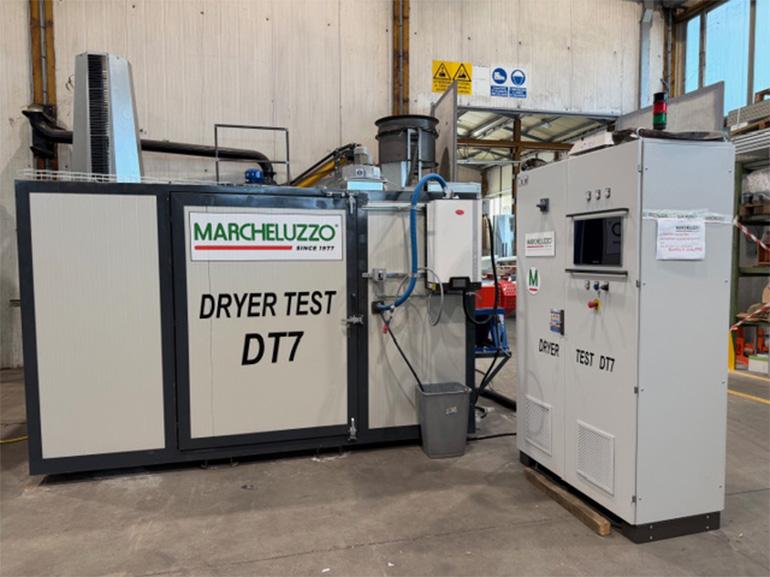
Given the highly specific nature of the drying process, Marcheluzzo has developed a test module that replicates real operating conditions.
This allows technicians to perform tests directly at customers’ facilities, analysing material behaviour – including the Bigot curve – and managing air, temperature and humidity parameters during drying. These tests, conducted with varying dwell times, provide a clear picture of material behaviour for more accurate dryer design.
This approach highlights Marcheluzzo’s commitment to innovation across all aspects of brick and roof tile production.
Ongoing dialogue with customers’ production departments is a fundamental source of data, enabling designers to constantly refine their technological solutions.
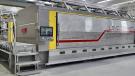
Cover photo: Static cells with perforated-wall ventilation/Celle statiche con ventilazione a parete forata

Did you find this article useful?
Join the CWW community to receive the most important news from the global ceramic industry every two weeks





Related articles

Recent articles
Sirsi Valves accelerates its growth


Bruno Bettelli elected President of ACIMAC
Main topics

Read more